For the Love of Labor

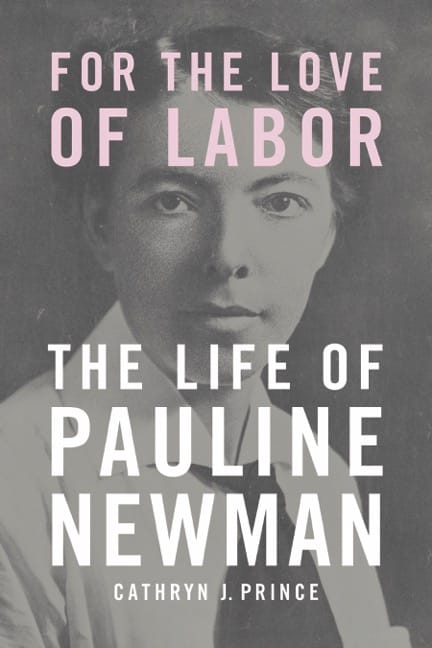
Historian Cathryn J. Prince talks about labor activist Pauline Newman; plus, granny grafitti, P-Funk's Mothership, and a few other odds and ends.
Hello, hello!
Here's hoping you all have had another wonderful week!
Today we've got journalist and author Cathryn J. Prince here telling us about her soon-to-be-released biography For the Love of Labor: The Life of Pauline Newman. Out next week from University of Illinois Press, it tells the inspiring story of an immigrant and tireless working class hero who spent her life fighting for better wages, better hours, and safer working conditions.
Sounds like someone we could use in Congress right now.
Anyway, without much further ado, here's Cathryn and the tale of her journey towards this fascinating heroine's story.
Paige
Sheer Grit
Cathryn J. Prince talks about a real-life heroine from the past whose battles are still being resolved.

Q: How and when did you learn about Pauline Newman? Tell us who she was and what it was about her story that you found so appealing.
A: I first heard about Pauline Newman from [literary consultant and developmental editor] Jill Swenson sometime in 2021. I’ve worked with Jill for about 17 years now, and she knew I was looking for my next book. She sent me a short blog post about Newman that a friend of hers had written. I was instantly drawn to Newman and began digging around online. There were so many aspects of her life that I knew would resonate with readers: her life as an immigrant, her educational aspirations, her budding confidence, and her persistence. I was also interested in exploring how, despite the significant changes she and her circle were able to make regarding workers’ rights and health care, there is still so much room for progress today.
Q: Finding an appealing story is one thing. Deciding to write an entire book about it is something else entirely. What made you decide that you not only wanted to write a book about Newman, but write a book about her now?
A: I wanted to write about Newman now because nearly every issue she fought for–while having made considerable and incredible progress–has yet to be fully resolved, be it an end to child labor, safe working conditions, fair pay, the role of women in the workplace, access to health care. So it just all felt so timely. For example, I’d be reading transcripts of hearings where she was testifying about maternity insurance (what we today call maternity leave) and seeing the
arguments against it, I’d have to remind myself that this was the 1920s and 1930s.
Q: How long did research for the book take and what did it entail?
A: The initial research took about two to three years, though I am never not researching as I write and rewrite. I started in 2021 but because of COVID and shutdowns I was limited as to what I could initially accomplish. I wanted to begin at The Kheel Center for Labor-Management Documentation & Archives at Cornell University but it was closed for in-person research. However, the archivists had gone back to work and so they were tremendously helpful. I could request files and they would scan and email me what I needed. I would not have been able to begin my work had it not been for their efforts. I also made multiple trips to the Schlesinger Library at The Radcliffe Institute for Advanced Study and New York University’s Tamiment Library. Beyond reading Newman’s primary source materials, I also delved into her partner Frieda Miller’s papers, Rose Schneiderman’s, and other labor leaders like Clara Lemlich and Mary Dreier. I so relished discovering and sorting through the ephemera of her daily life; from her naturalization certificate, to the scores of silly greeting cards and cheeky telegrams she and her colleagues sent and received, in addition to documents of a more serious nature. Of course then there were the contemporaneous accounts about things Newman was involved in and so it went.
Q: As you looked into Newman’s life, what were some things that 1. pleasantly surprised you, 2. absolutely gobsmacked you, and 3. truly inspired you about her?
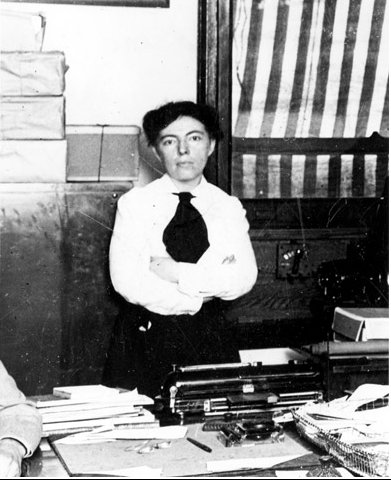
A: 1. I was pleasantly surprised to learn that Newman enjoyed poker games and the occasional cigar as she got older. I don’t partake in either, but I say it pleasantly surprised me because it showed this side of her that wasn’t apparent at first. 2. I’m still gobsmacked by how young Newman was when she started. She organized the largest rent strike at age 16 and by her early twenties was the first female paid organizer for the International Ladies' Garment Workers' Union (ILGWU). 3. The thing about Newman that continues to truly inspire me is her sheer grit.
Q: Tell us about the Triangle Shirtwaist Factory and why that played a pivotal role in inspiring Newman to become involved in labor activism?
A: She was already deeply involved in labor activism by the time of the March 25, 1911 fire. At the time she was working at the ILGWU office Philadelphia. As soon as she heard about the fire she hightailed it back to New York. Because she had worked there as a young teen, she knew exactly what it meant to be locked inside during the day, the way the odors of the factory–lint, oil, dirt–seeped into your pores. She knew many of the 148 people, mostly young female immigrants, who were injured or killed. And so she was more driven than ever to ensure that working conditions were safe and met standards.
Q: It was rare for women of that era to be leaders in the labor movement. Why do you think Newman was able to ascend into such a role and be taken seriously?
A: Quite simply, I think Newman’s reputation preceded her. As I mentioned she’d led a rent strike at 16 and was speaking on street corners about worker safety in her early 20s. So for those in leadership roles who were paying attention, men like Samuel Gompers, you would have noticed that she could get the work done.
Q: What do you hope readers take away from the book, especially right now?
A: I hope readers are inspired by Newman’s perseverance, her dedication to improving the lives of others as well as the way she understood that one could be strong but not strident and perhaps most of all, that Newman, who worked well into her 80s, shows us that age and experience are assets.
Q: Anything else on your mind today?
A: Well, we’re in the middle of a blizzard here on the East Coast and I’m thinking how nice it will be to get outside into the snowy woods with my black lab, Stella.
For more on Cathryn, please visit her website and her Instagram @cjprince7676. And, of course, please consider pre-ordering For the Love of Labor online or from your favorite local independent bookseller!
Writing prompt: Write about your first job. What was it, how old were you, what were you hired to do, and what was your first boss like? What did you like and hate about the job? What did you feel was fair or unfair? And what did you learn from the experience?
I declare to you that woman must not depend upon the protection of man, but must be taught to protect herself, and there I take my stand.
-- Susan B. Anthony
Endnotes
Flower Girl
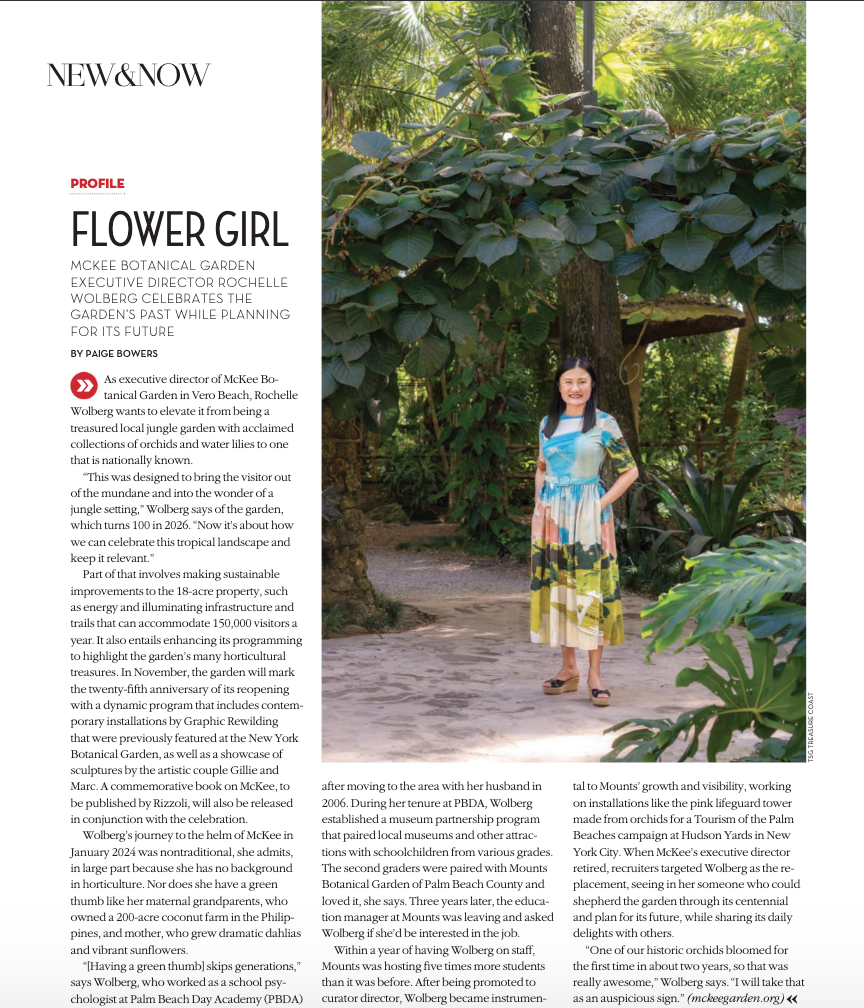
Recently, I had a fascinating conversation with Rochelle Wolberg, executive director of the century-old McKee Botanical Garden in Vero Beach, Florida. Wolberg isn't a green thumb, she admits, but as you can see in the story up above, she has some ideas about how to celebrate this grand old garden's past as she brings it into into its next century.
Granny Graffiti

Last Thursday afternoon, I went museum-hopping while I waited for my youngster to be done with class for the week. I mentioned the international poster biennial exhibit I saw at MODA in the last issue, but I also wanted to mention a smaller exhibit there too – Carole Loeffler's Granny Graffiti. For the past eight years, this Philadelphia-based artist has cut out various affirmations from red felt and glued them onto frilly doilies before hanging them on telephone poles. People really like the cozy-looking messages that do everything from inspire to light a fire under their rears. Loeffler work tends to appear when she feels people need it most...like right now. If you're in the Atlanta area – or have plans to be – be sure to pop by MODA to see this and the poster biennial exhibit, both on display until mid-May.
Tear the Roof off the Sucker

Once upon a time I interviewed Parliament-Funkadelic bandleader George Clinton and it was definitely a very groovy experience. I say that to say this: we all deserve this oral history of how his stage prop, The Mothership, came into being.
Things I'm Enjoying
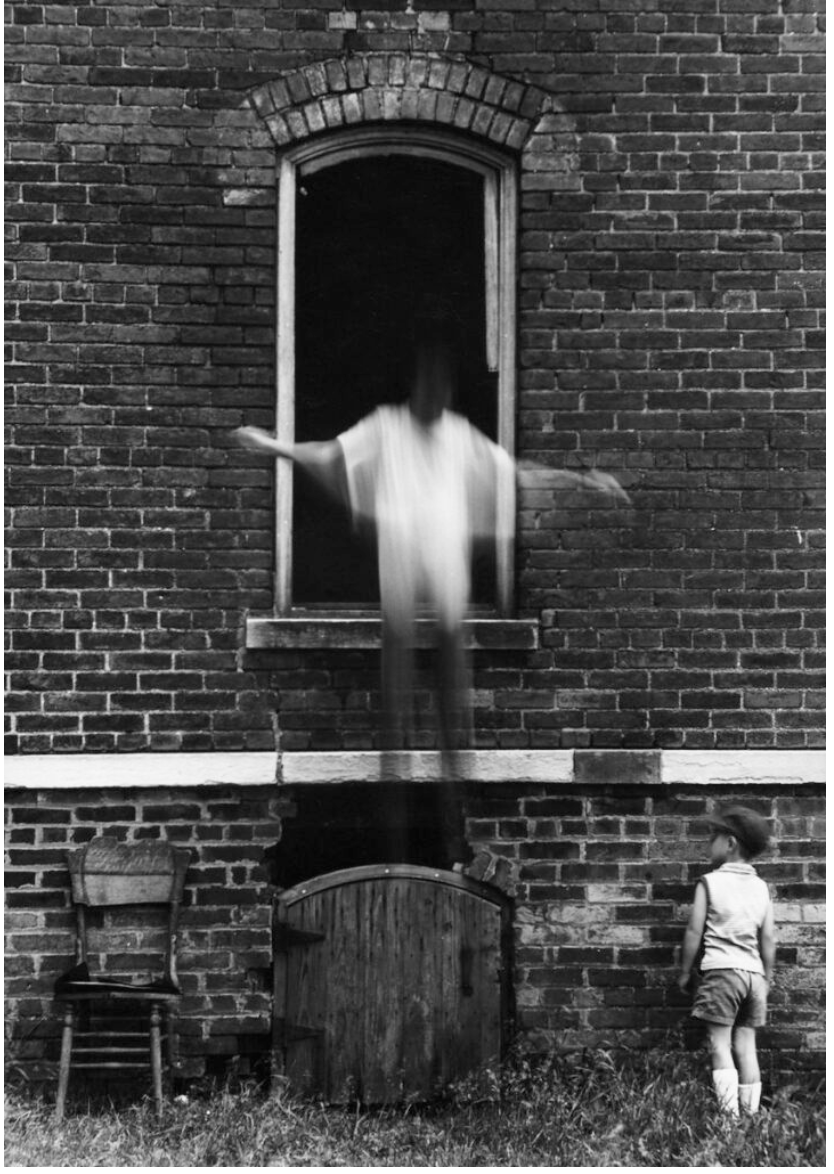
Self-taught shutterbug Ralph Eugene Meatyard's beautifully haunting photographs, now on display at the High Museum of Art through May 10. This profile about veteran actor Ted McGinley, who has become one of my favorite characters on Apple TV's Shrinking. Thinking about ways to use what I learned in a Minnesota Center for Book Arts workshop I took this week. First birthday parties.
If You Have The Time and Inclination...
...please consider fostering (or even adopting) a doggo or kitty from your local animal shelter. I've been seeing all these stories about how intake has been exceeding capacity at a lot of shelters recently and I would hate for something bad to happen to one of these furry little beasts. If you can help, please do. Thank you!
Paige Bowers Newsletter
Join the newsletter to receive the latest updates in your inbox.