Skip to content

Embracing Your Nature

Paige Bowers
Paige Bowers
7 min read
Embracing Your Nature

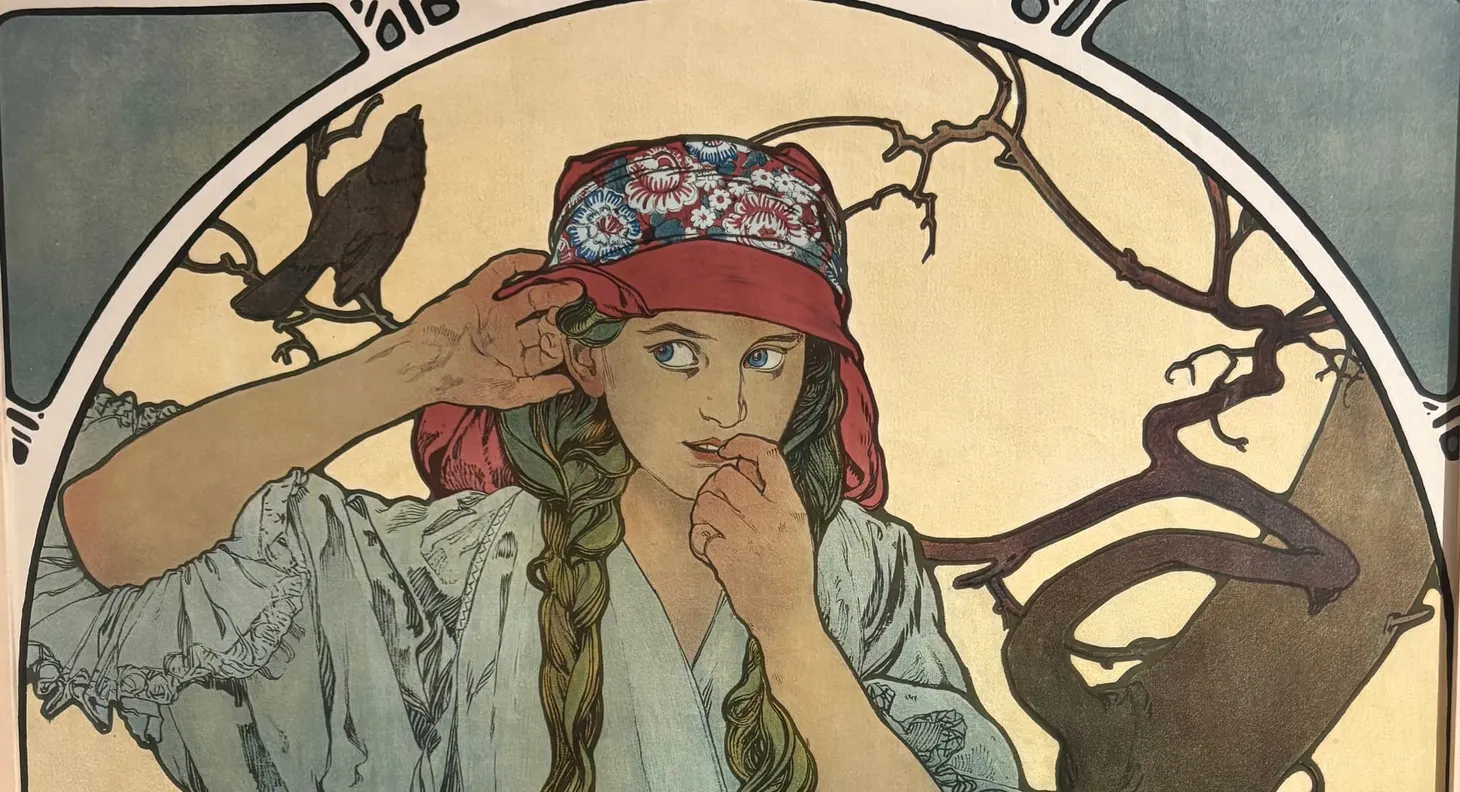
Photo by micheile henderson / Unsplash

An ode to doing it your way; plus, civil rights icons, the truth about literary prizes and a few things I'm enjoying.

Hello readers,

How are you?

I've been thinking about something Jami Attenberg wrote this week: "There is no prize for going against your own nature."

"Denying one’s instincts, while itself a challenge, is fundamentally different from what I consider good creative challenges: trying out different formal approaches, pushing yourself to take on important, urgent subjects; embarking on bigger and more ambitious projects. Challenging yourself is rewarding. Going against the wild beautiful cry of your heart, I promise you, is not."

All of a sudden I was reminded of the first time I taught a French history class for continuing education at LSU. Those who know me well, know that there was a time when the idea of speaking in front of more than a handful of people was enough to make me lose sleep and/or eat my feelings.* After I finished graduate school, someone I know told me that I should teach a class. Because I love that person to pieces, I told her "okay sure" before reflecting on my little phobia.

Well...

I don't remember the name of the class I decided to teach or how I sold it (PTSD is real). Whatever it was, I had to create it from scratch, which is an awful lot of hard work, even if you know these facts and stories about ye olden times. And if you skew nervous, as I do, there is always the chance that you will stand there and draw a blank.

So not only did I plan the class, I scripted it too, just to be sure I wouldn't screw something up.

I thought I was ready.

Reader, I was not.

On day one, I looked out across the fifty-some-odd people who were sitting there and had the distinct feeling that whatever I was doing was not engaging them at all. I don't even remember what I was saying, or how I was saying it, but I remember looking up at the clock and realizing that only ten minutes had elapsed and there was a wholllle lot of time to go. Talk about misery.

It should come as a shock to no one that I finished the class early that day. Some people left in the middle of it. Some withdrew. But others didn't. I was pretty mortified. I went home, crashed on the couch, and cried my eyes out. In that moment, I had no idea how I would get through the rest of this damned class for the people who remained. I called Beloved Mentor Pal (BMP) to tell him about my defeat, and then probably did a fair amount of whining about how he's so good in front of a class and so clever and if I learned from him, then why do I suck?

Boo hoo hooooo...

BMP took a deep, cleansing breath. And I don't remember what he said to me after that (again, PTSD), but I remember that when he was done, I picked myself up, dusted myself off, and killed myself to redo the rest of this class so I could survive what remained. And I did survive. Even weirder, people signed up for the next class I taught, and that one was a hit. I'd like to think it was a hit because I started one class by singing Cole Porter's "You Do Something To Me", which was related to that day's lesson. Some of the class joined in to sing along, and it was a hell of a good time, kind of like France was in the 1920s, especially if you were an expat without a care in the world. But what really made the class good was that I was teaching it the way that seemed right to me – Let's frolic through this moment together, shall we? – and not trying to be that icon BMP, who, again, would like it if I'd shut up about him and just let him be retired in peace.

Maybe next week.

At the end of the day, great mentors don't want you to be them, they want you to learn from them so you can be you in all your glory. As I sit here and think about it a little more, I'd love to teach that "The Lost Generation in France" class again because it was definitely something that was aligned with the wild, beautiful cry of my heart. On the last day, the class showed up dressed like they were ready for a summer 0n the French Riviera in the 1920s. It was a huge surprise and even bigger delight because it meant a. they paid attention, and b. they actually took the time to quietly coordinate that little fashion show amongst themselves. Though I had still had that chip on my shoulder from the very first class I ever taught, I realized this moment was what I got for hanging in there and letting my own nature lead the way. And let me tell you: it was so worth it.

Until next week my friends,

P

*I'm better with public speaking than I used to be. Weirdly, singing lessons were among the things that helped me overcome my phobia. Nothing will toughen you up more than singing "You'll Never Walk Alone" at top volume while your teacher shouts "BREATHE!!!" at you when you least expect it.


Writing prompt: Write about a time when you followed your instincts and it went better than you could have imagined.


Marian Anderson singing on the steps of the Lincoln Memorial in 1939. Photo: Robert S. Scurlock/Scurlock Studio Records.
The minute a person whose word means a great deal to others dares to take the open-hearted and courageous way, many others follow.
-- Marian Anderson

Endnotes

"The Solid Base of the Movement"

Photo: Stephanie Eley for Atlanta Magazine

When 88-year-old John Thomas Johnson speaks to young people, he's all-too-aware of their fidgeting and seeming eagerness to be anywhere else. What those youth come to realize is that while Johnson may not have schools or streets named for him, he was a trusted lieutenant to Martin Luther King Jr. during the Civil Rights Movement, and a little-known force who was instrumental in organizing protests against racial segregation, and getting the Civil Rights Act of 1964 and the Voting Rights Act of 1965 signed into law. Though former Atlanta mayor Andrew Young is often described as MLK's last close associate, Young is quick to point out that Johnson was too. “The movement was very much like an iceberg,” Young told Atlanta Magazine. “There was a beautiful part at the top that you can see, but the frozen waters underneath were really the solid base. And J.T. Johnson was part of the solid base of the movement.” These days, Johnson continues to make an impact with his Take 2 America Foundation, which strives to create nonviolent societal change in much the same way he did in the 1960s. And after decades of silently struggling to learn how to read, Johnson recently learned that it was because he had dyslexia. Now, he is learning to read with the help of an AI-powered computer program, which, to me, actually seems like a good use of this technology. "I've been ashamed a long time," Johnson told People Magazine. "I'm getting ready to not be ashamed any more." As if we needed any more proof that he was brave, and very, very awesome. For more on this little-known hero, check out this Atlanta Magazine profile by C.B. Hackworth. And, if you can, please consider a donation to Take 2 America. Thank you.

The South in Color

Photo: Untitled by Gordon Parks

Right now Atlanta is jam-packed with great exhibits, from the Dior show at SCAD FASH to the Amy Sherald retrospective at the High Museum of Art. One I haven't seen though is Gordon Parks: The South in Color at Jackson Fine Art (JFA). The exhibit is timed to commemorate the 70th anniversary of Parks' photos of the segregated South in Life, and the 20th anniversary of the founding of The Gordon Parks Foundation. I'm eager to get over to JFA before the city is crawling with World Cup fans, and the show ends its run on July 11. If you are in or around the Atlanta area and interested in seeing it too, visit jacksonfineart.com for more information. Who knows? Maybe we'll see each other there.

How Book Prizes Work

Photo: Walmart.com

I write things. But when people get desperate for a warm body to judge short or longform work for awards, I am typically more than happy to do that too. One of the reasons I enjoy doing it is because I'm always learning something new from other people's work, whether it's about what they've written, or how they've written it. This week author Rebecca Makkai, who has judged six book prizes in the past eight years, wrote about how the prize-judging process works. It's not what you think, of course. I'd love to hear your thoughts on what she wrote, either as readers, or writers. Did this surprise you? Fascinate you? Something else? Hit reply and let me know what's on your mind.

Things I'm Enjoying

Hummingbirds flitting around outside my office window. Dua Lipa's wedding photos and the extraordinary number of think pieces that resulted. The return of my neighbor's annual dad-joke-a-day whiteboard, which will remain in his front yard until Father's Day. The discovery of an ancient slideshow used to convince a certain set of parents to buy a certain kid a light saber back in the day...

amy sheraldartatlantabiographycreativitycuriosityfeature writingfreelance writerfrancefrench rivierahistorylittle known peoplenonfictionphotographystorieswriting promptwriting promptsbooksbook awards

Paige Bowers

Paige Bowers is a journalist and the author of two biographies about bold, barrier-breaking women in history.

Comments


Related Posts

Members Public

American Sublime

American Sublime
Members Public

Dying of Curiosity

Dying of Curiosity
Members Public

Fertile Ground

Fertile Ground